I moved to Carmel, California.
A seafront I keep meaning to leave became California for one instant, and my body believed it.
There is a stretch of seafront in Turgutreis that I have walked many times, a place I never chose and keep meaning to leave. This morning it stopped being Turgutreis.
It was the light, mostly. The smell of the water, the wind, the low cloud sitting on the sea. For one instant the coast in front of me was not the Aegean at all. It was Carmel, California, in the summer of 1996, and I was walking the seafront there, happy, thirty years younger.
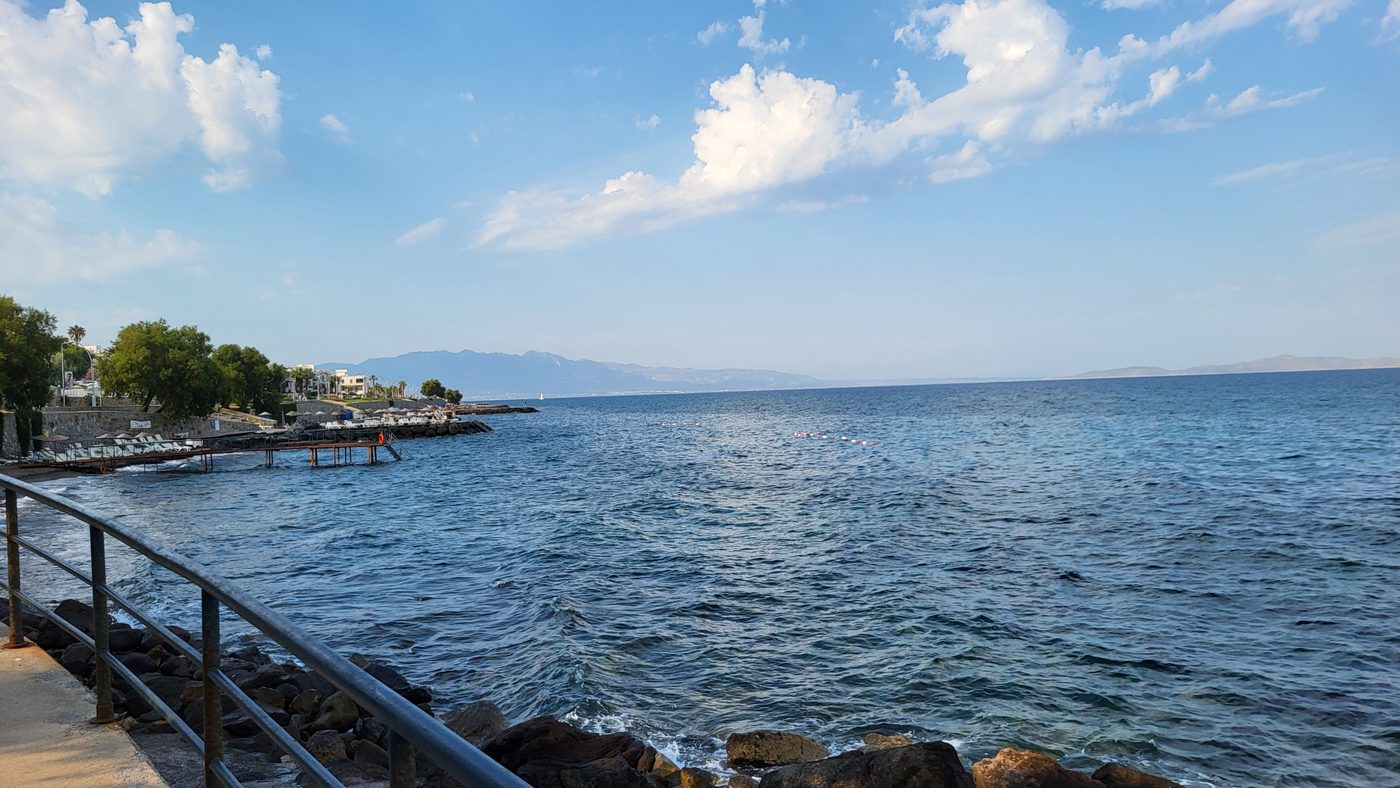
I cannot even say the two places look alike. Probably they do not. But the eyes do not file what is in front of them, they file what it reminds them of, and that morning my eyes filed Carmel. In 1996 I drove down from San Francisco on Route 101, through Monterey and Carmel and the long beautiful coast, down to La Jolla and the old town of San Diego, then back north on Interstate 5 for the flight home. One of the good ones. So when the light and the wind lined up this morning, my brain reached back three decades and handed me that trip, intact, for free.
Here is the strange part. I do not like it here. Most days I feel like a prisoner of this town. And yet for that one instant I liked the place, even loved it, and was glad to be standing exactly where I stood.
Because a walk is really a string of small chemical verdicts, one after another. A beautiful woman passes. Testosterone wakes up and immediately remembers that it is thirty years too late. An old man shuffles by with failing legs. Cortisol, and a glimpse of the future. Another old man smiles and says good morning. Dopamine, perhaps serotonin, and a reminder that strangers can still improve a day. A stray dog. Adrenaline. Too many stray dogs. Real adrenaline. The sun burns. The wind cools. The sea offers calm and adventure at the same time. A smoking engine passes and poisons the air. Irritation. Trees cast a good shadow. Peace. A cat talks to me as if we share a language and I find myself wishing technology would hurry up and invent a translator.
That testosterone line is not theoretical. A woman was walking ahead of me at exactly my pace, and something old and stupid in me decided I had to be in front. I sped up, passed her, felt magnificent for about four minutes, and then my ankle began to complain. Further along I had to sit on a bench to rest it, laughing at how much of a caveman I still am. She caught up while I sat there. As she walked past she smiled, the kind of smile that says she had watched the whole performance and understood every second of my old caveman ego.
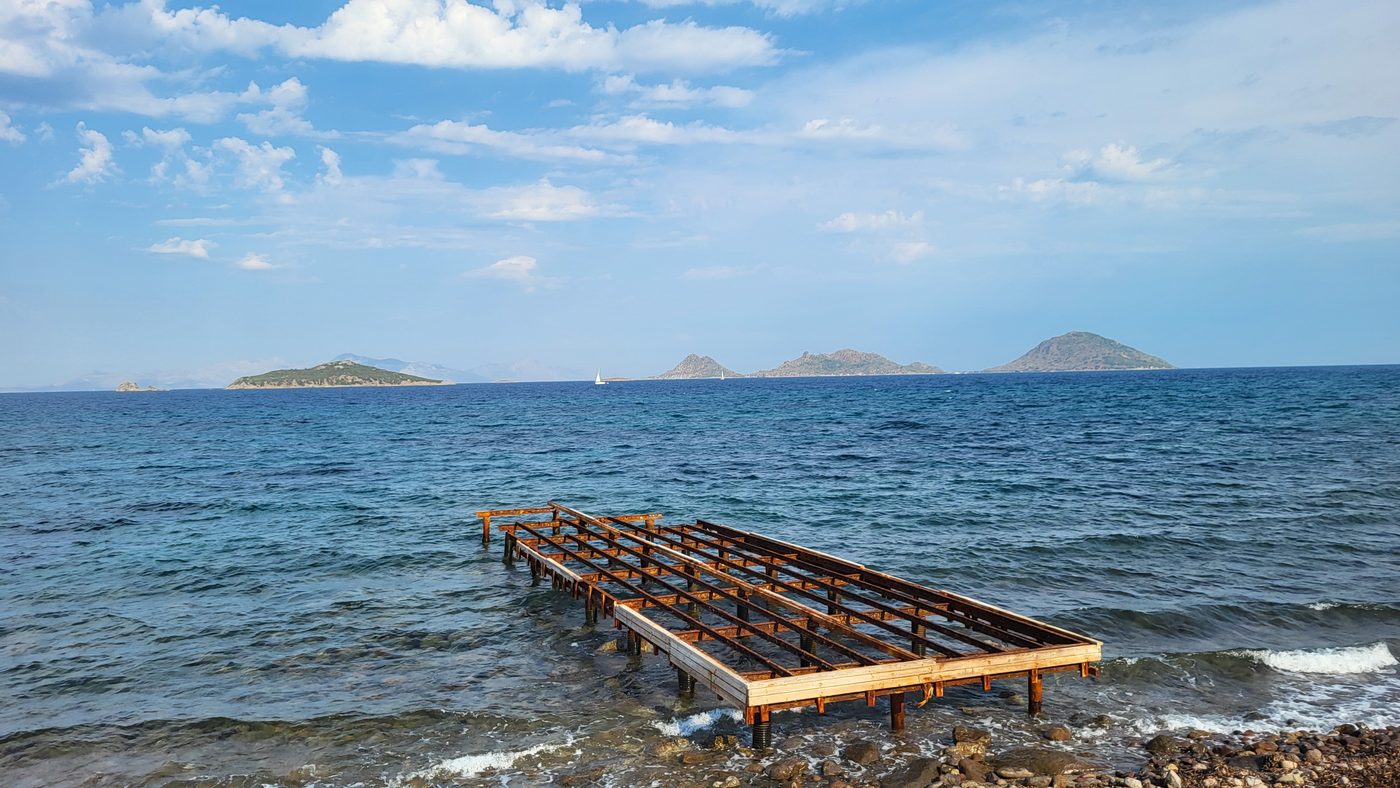
That is the lesson I keep relearning. You can change how you feel. It is mostly programming, adapting to the circumstances you did not choose. The birdman in the old story of Alcatraz kept his birds and made the prison bearable, even good, without ever leaving it. I feel imprisoned here, and still, for one instant, the sea and the wind and a memory of California let me out.
The brain is the real driver. It decides what to make of the light, the dog, the smoke, and it doses you accordingly. The trees, the shadow, the sea, the waves, the wind, the cloud, all of it can turn into peace, if the driver decides it should.
And the rest of it, the sprint past the stranger, the sore ankle, the pride, that stays. Hormones and the amygdala do not care how old or how civilized you believe you are, and they do not tell men and women apart. We are all, to the last day, caveboy and cavegirl.
Back to all short waves, or follow the frontier at imbros.ai.